 |
 A Baule female sculpture, Ivory Coast. These figures usually feature elaborate coiffures, often with symmetrical rows of braids or stylized buns, and scarification marks that enhance their idealized beauty. The body is slender and proportionally balanced, with hands typically resting on the abdomen or holding attributes such as a bowl or child—gestures that may symbolize fertility or caregiving roles. The surface is meticulously polished, and figures are often anointed with oil or other substances as part of ritual practice. Baule female sculptures are not merely decorative objects; they serve important spiritual and ritual functions. Many of these figures are understood as "blolo bla" (spirit wives) or "blolo bian" (spirit husbands)—spiritual spouses believed to exist in a parallel, ancestral realm known as the blolo. According to Baule cosmology, every individual has a spirit spouse, and when disruptions occur in one’s personal or social life, it may be attributed to neglect of this spiritual relationship. A sculpture is commissioned through a diviner (komien) to represent the spiritual partner and is kept in a private shrine where it is regularly tended with offerings and prayers. In addition to their use in private devotion, similar female figures are employed in vcial and aesthetic values. Baule sculpture is distinguished by its naturalism and balance, features that set it apart from neighboring traditions such as the abstracted forms of the Senufo or the dynamic masks of the Dan. The emphasis on symmetry, refinement, and emotional restraint in Baule art speaks to a broader cultural ethos of self-control, harmony, and respectability. Ornaments above the face are chosen for their beauty and have no iconographic significance” p.141 sold Height: 52 cm |
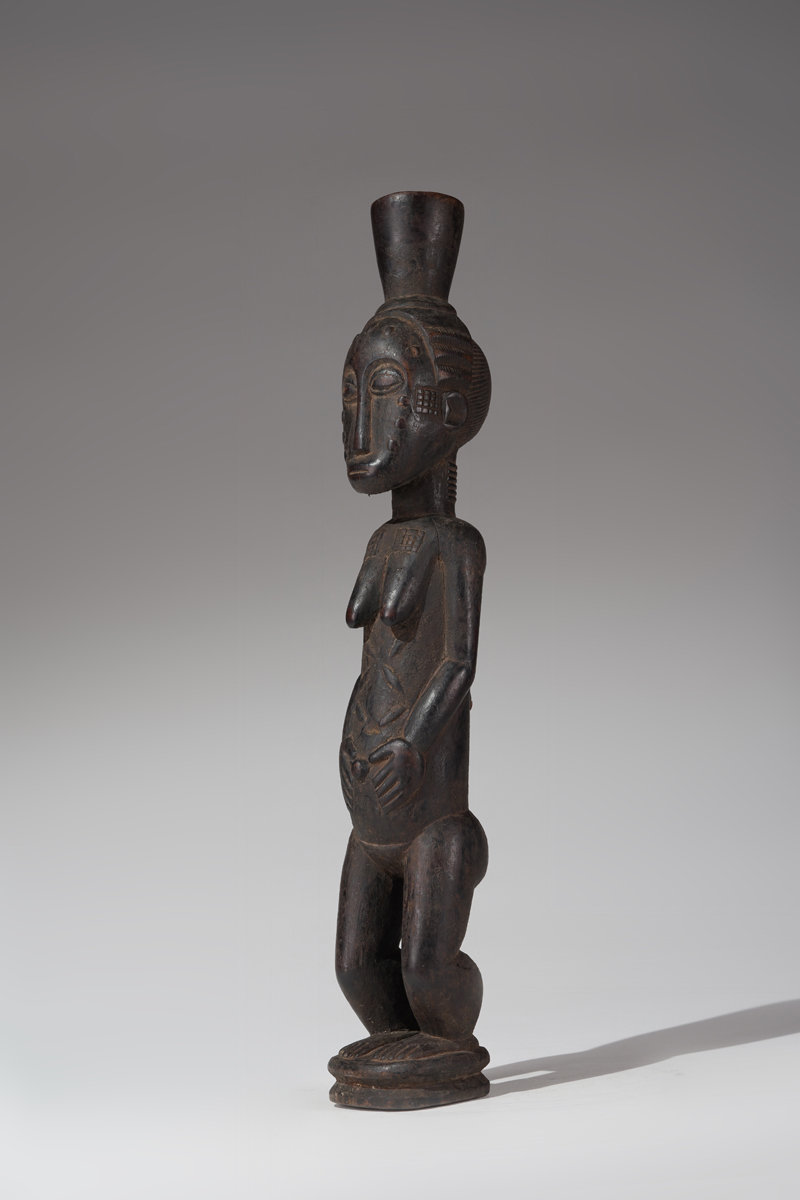 photo: wolfgang-jaenicke.com, for more information, please write us an e-mail with the identification number of the photo identification no. CAB09605.jpg |
 |