 |
 A Bamana sculpture, Mali, Bla region.
The Bamana (or Bambara) sculpture tradition of the Bla region in Mali represents a deeply symbolic and spiritually charged artistic practice that reflects the cultural and religious values of one of West Africa’s largest ethnic groups. Known for their wood-carved figures used in initiation rites, agricultural rituals, and protective ceremonies, Bamana sculptures are typically abstracted, emphasizing form, proportion, and symbolic gesture over naturalistic detail. These sculptures—ranging from nyama power figures to elegant chiwara headdresses—embody spiritual energy and are often linked to secret societies such as Komo and Jo, which govern moral conduct and communal cohesion. In the Bla region specifically, the stylistic approach favors elongated forms, geometric simplification, and an emphasis on verticality, all of which underscore themes of fertility, wisdom, and ancestral reverence. Used not as static art but as dynamic tools in masked dances and ritual performance, Bamana sculptures are imbued with layers of meaning and sacred power, serving as mediators between the physical and spiritual realms. As art historian Herbert M. Cole explains, “Bamana art is not created merely to please the eye or to decorate. Instead, it is a means of channeling spiritual forces, a tool for the community to engage with the unseen world. The figures and masks are charged with nyama—a potent life force—and through ritual, this power is awakened to protect, heal, or guide the people. The artist’s role is not just that of a craftsman but of a spiritual intermediary who gives visible form to invisible realities.” This perspective highlights how Bamana sculpture transcends aesthetics to become an essential element of social and religious life in the Bla region.
The Bla region is located in the central part of Mali. It is predominantly inhabited by the Bamana (Bambara) people, one of Mali’s largest ethnic groups known for their rich cultural traditions, especially in music, dance, and visual arts. Bla town serves as a local administrative and cultural center, facilitating trade and cultural exchange among surrounding villages. The region’s landscape is characterized by the Sahelian environment—semi-arid with seasonal rainfall supporting subsistence farming and livestock herding. Agriculture, particularly millet and sorghum cultivation, is central to the economy and deeply intertwined with spiritual and social practices. The Bla area is well-known for preserving Bamana social institutions, including powerful secret societies such as Komo and Jo, which play key roles in maintaining social order, moral conduct, and community rites of passage. This cultural vitality is reflected in Bla’s vibrant tradition of sculpture, mask-making, and ceremonial performances, where artistic expression is inseparable from spiritual life and communal identity. The region thus stands as a vital stronghold of Bamana heritage in Mali, blending everyday life with ancestral customs and sacred ritual.
sold
Height: 66 cm
Weight: 3 kg |
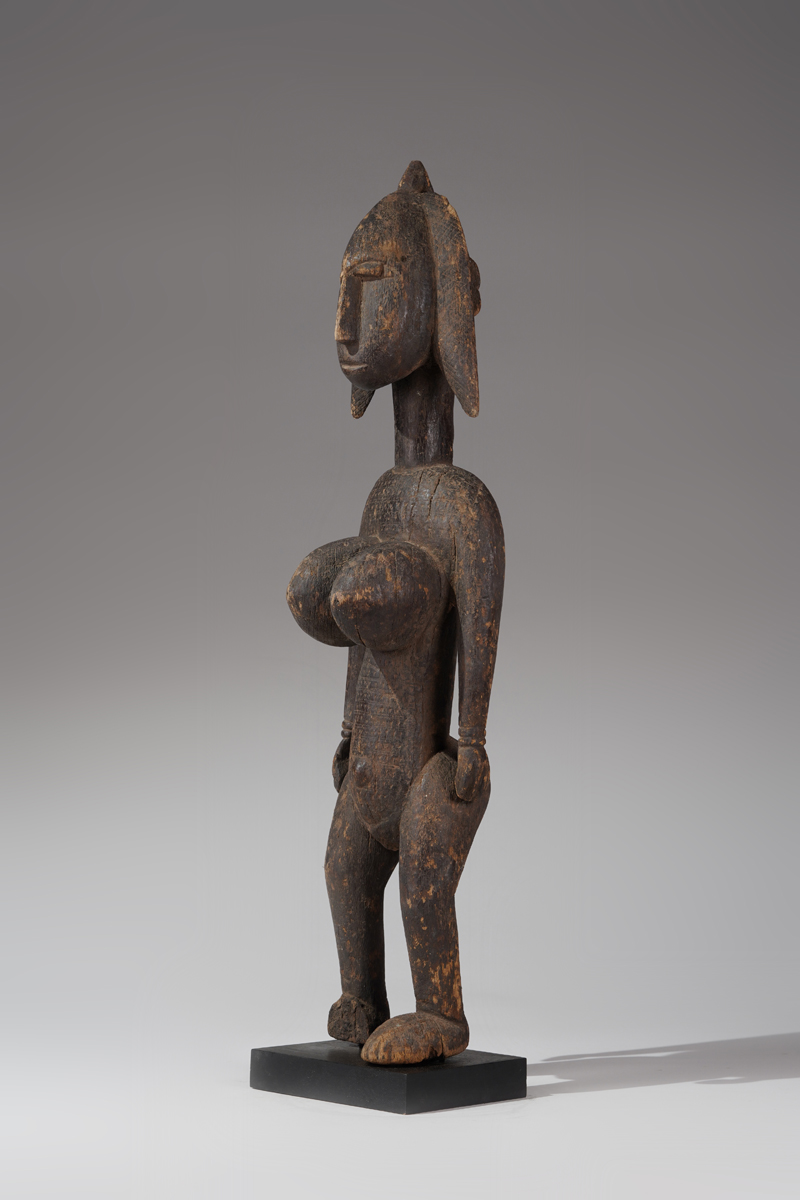 photo: wolfgang-jaenicke.com, for more information, please write us an e-mail with the identification number of the photo identification no. CAB09625.jpg
 |
|
