 |
 A Baule fertility sculpture, Cote D'Ivoire Baule fertility sculptures from Côte d’Ivoire embody a synthesis of aesthetic refinement, spiritual function, and social symbolism within Baule cosmology and material culture. Carved from wood and often polished to a dark patina through ritual use, these sculptures typically represent idealized female figures with full breasts, rounded hips, and elaborate coiffures, signifying both physical beauty and reproductive potential. Their primary function is spiritual: they are often created in consultation with a diviner (komien) to address issues of infertility, miscarriage, or spiritual imbalance, and may represent either an ancestral figure or a spirit spouse (blolo bla) whose presence is believed to influence the woman's fertility. These figures are kept in domestic shrines and offered food, prayers, and libations in order to activate their protective and generative power. The calm facial expressions and symmetrical forms reflect the Baule ideal of composure and spiritual harmony, which is intimately connected to social expectations of womanhood and motherhood. As art historian Susan Vogel notes, “The sculpture is not an image of a person, but a spiritual being who takes on human form to communicate with and aid the living; it is not valued merely for what it represents, but for what it is: a conduit for spiritual presence and a focal point of ritual action” (Vogel, 1997, p. 82). Thus, the Baule fertility sculpture is more than a physical representation of fertility; it is a spiritual instrument designed to mediate between the visible and invisible realms, embodying both the aspirational aesthetics and the religious beliefs of the Baule people. These figures have also come to signify broader themes of continuity, lineage, and the sanctity of reproduction in West African cultures, while simultaneously captivating collectors and scholars with their formal elegance and symbolic depth. Reference: “To articulate historians, the most consistent features of Baule art is a kind of peaceful containment. Faces tend to have downcast eyes and figures most often hold their ams against the body. […] Among their abundant art forms, the Baule people continue to place the greatest value on masks and figure sculptures, which remain the only sculptural art still widely used in Baule villages. While there is a difference between the Baule view of their objects and that of Western connoisseurs, there are points of agreement. Aesthetic appreciation is one: Baule artist, and individual owners of objects, certainly sometimes enjoy the beauty of these objects and the skill it took coproduce them. […] Ornaments above the face are chosen for their beauty and have no iconographic significance” p.141 Lit: Baule: African Art, Western Eyes. Susan M.Vogel 1997. sold Height: 34 cm |
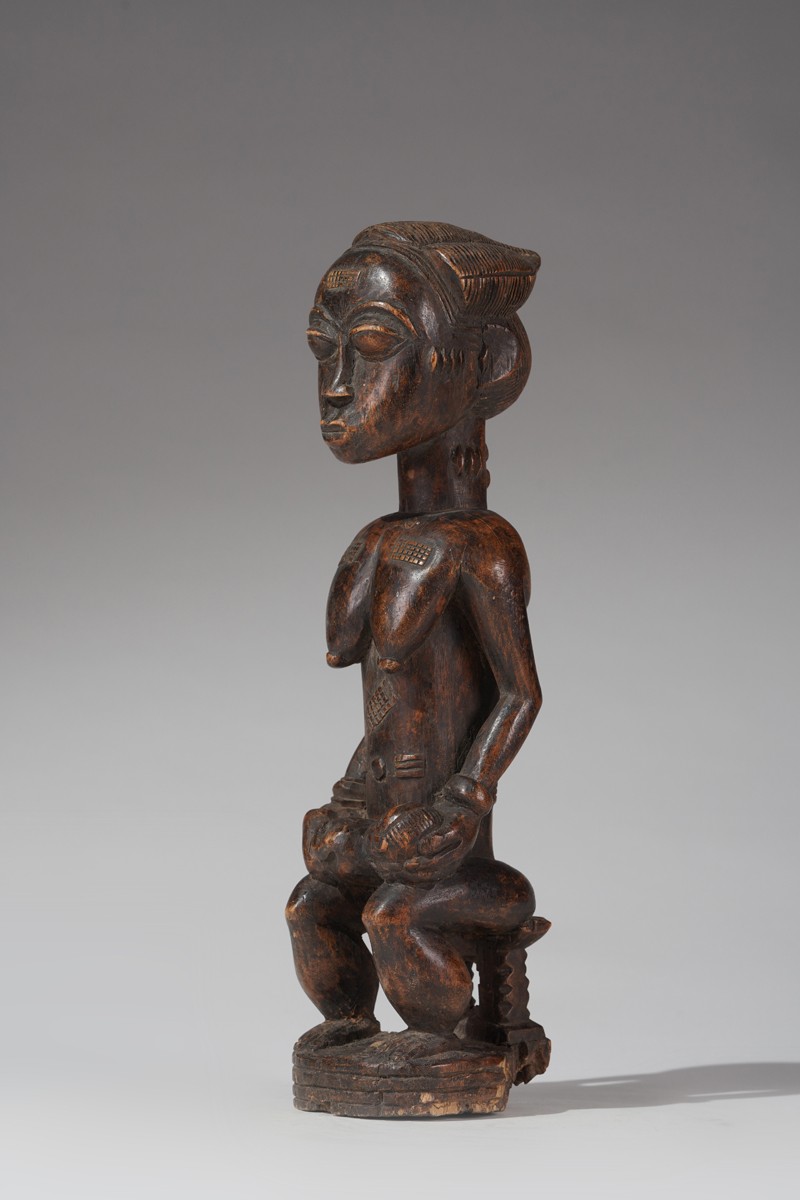 photo: wolfgang-jaenicke.com, for more information, please write us an e-mail with the identification number of the photo identification no. CAB09661.jpg |
 |