 |
 A Yoruba female sculpture, with bowl on her head, Nigeri, Kwara state region. In Kwara State, Nigeria, a culturally significant region where Yoruba traditions intersect with Nupe and Bariba influences, the image of a female figure carrying a bowl on her head represents a powerful motif in Yoruba sculpture, encapsulating ideas of service, sacrifice, and spiritual mediation. These figures, often carved from wood by professional sculptors (onísè), are typically associated with shrine contexts, particularly as offering bearers (olúbo or aro figures), and may be placed at the entrances of òrìṣà shrines, especially those of Òṣun, Ṣàngó, or Ifá. The bowl often symbolizes a receptacle of wisdom, sacrifice, or offerings, and the female form—idealized with upright posture, serene facial expression, and finely coiffed hair—embodies Yoruba ideals of beauty (ewa), morality (ìwà), and responsibility. The act of carrying a bowl on the head, a traditional gesture of women in ritual and daily life, here becomes a metaphor for bearing the weight of spiritual obligations. As Henry Drewal explains, “ In Yoruba thought, women are not only biological nurturers but also cultural stewards, and their representations in sculpture—especially as bowl bearers—symbolize the readiness to serve both divine and communal forces with grace and strength” (Drewal & Pemberton, 1989, p. 113). These figures are ritually activated through libations and offerings, and may serve both as protective icons and agents of intercession. In the Kwara region, where traditions like the worship of Òrìṣà Ọbà and local variants of Ifá divination remain active, such sculptures reflect a synthesis of artistry and cosmology, rooted in the belief that visual forms can channel and sustain àṣẹ, the divine life force that empowers ritual action and maintains cosmic order. sold Height: 34 cm |
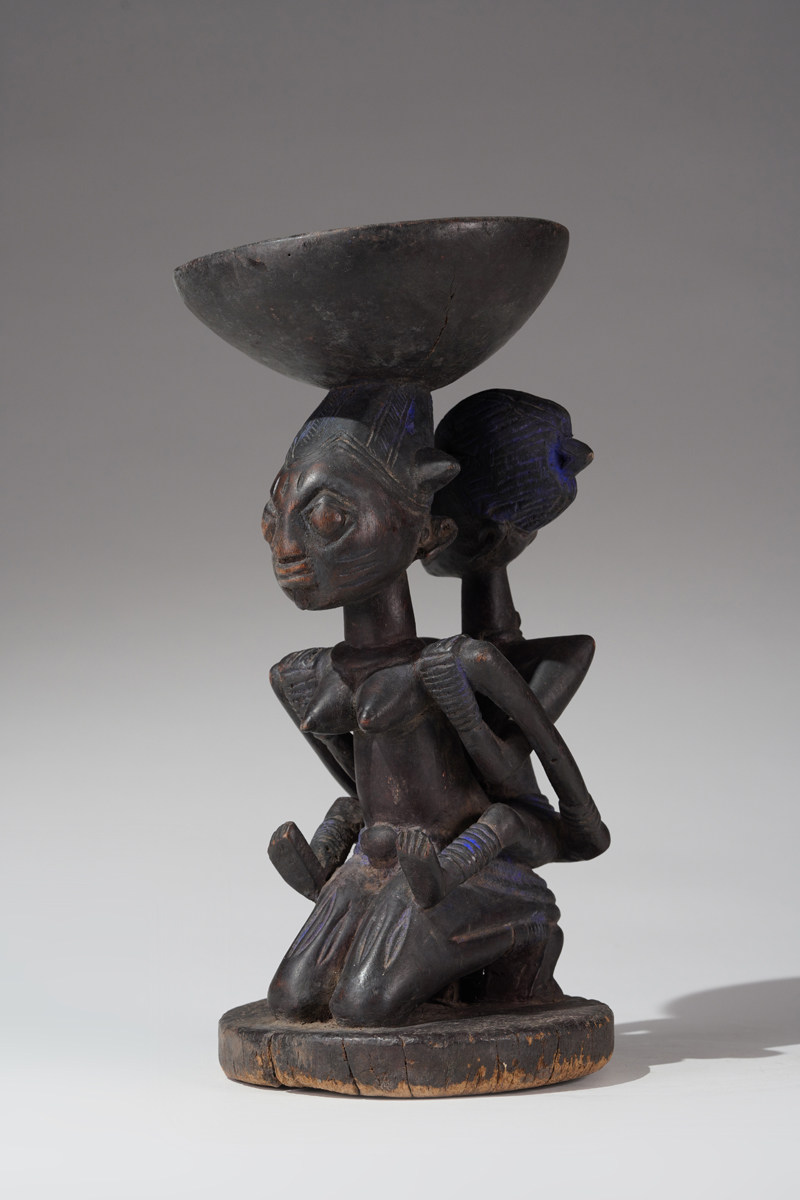 photo: wolfgang-jaenicke.com, for more information, please write us an e-mail with the identification number of the photo identification no. CAB09684.jpg |
 |