 A disk-headed Akuaba fertility puppet, Ghana, blackened patina, signs of age and ritual use. The akuaba is a well-known fertility figure originating among the Akan peoples of Ghana, particularly the Fante and Ashanti. Characterized by a stylized, disc-like head, cylindrical body, and abbreviated limbs, these wooden sculptures were traditionally carried by women who desired to conceive. The akuaba functioned not merely as an object of devotion but as an embodied prayer—a tangible manifestation of the woman’s wish for a healthy and beautiful child. According to Akan beliefs, fertility is not solely a biological concern but is deeply integrated with ancestral favor and cosmic balance. The akuaba is thus not an idol but a mediating figure through which supplicants engaged spiritual and social systems of well-being. Typically, the figure would be cared for as one would a living child: bathed, clothed, and carried on the back. This ritualistic handling both symbolized and reinforced the desired outcome—successful conception and childbirth.¹ Aesthetically, the form reflects ideals of Akan beauty, especially in the large, high forehead, which symbolizes wisdom and attractiveness. The stylization also communicates broader philosophical notions of abstraction and essence over realism.² While the core function of the akuaba has declined in contemporary practice, its image persists in Ghanaian popular culture, tourist art, and diasporic African identity, where it serves as a symbol of motherhood, continuity, and heritage.³ "Disk-headed akuaba figures remain one of the most recognizable forms in African art. Akua ba are used in a variety of contexts; primarily, however, they are consecrated by priests and carried by women who hope to conceive a child. The flat, disklike head is a strongly exaggerated convention of the Akan ideal of beauty: a high, oval forehead, slightly flattened in actual practice by gentle modeling of an infant's soft cranial bones. The flattened shape of the sculpture also serves a practical purpose, since women carry the figures against their backs wrapped in their skirt, evoking the manner that infants are carried. The rings on the figure's neck are a standard convention for rolls of fat, a sign of beauty, health, and prosperity in Akan culture. The delicate mouth of the figure is small and set low on the face. The small scars just discernible below the eyes of this figure refer to a local medical practice as protection against convulsions. Most akua ba have abstracted horizontal arms and a cylindrical torso with simple indications of the breasts and navel; the torso ends in a base as opposed to human legs. The style of this sculpture is rare among other extant examples of akua ba due to its miniaturized naturalistic body, arms, and legs. Full-bodied figures such as this are believed to be a recent twentieth-century innovation within the akuaba sculptural tradition..." Source: The MET Museum, NY.
sold Height: 36 cm |
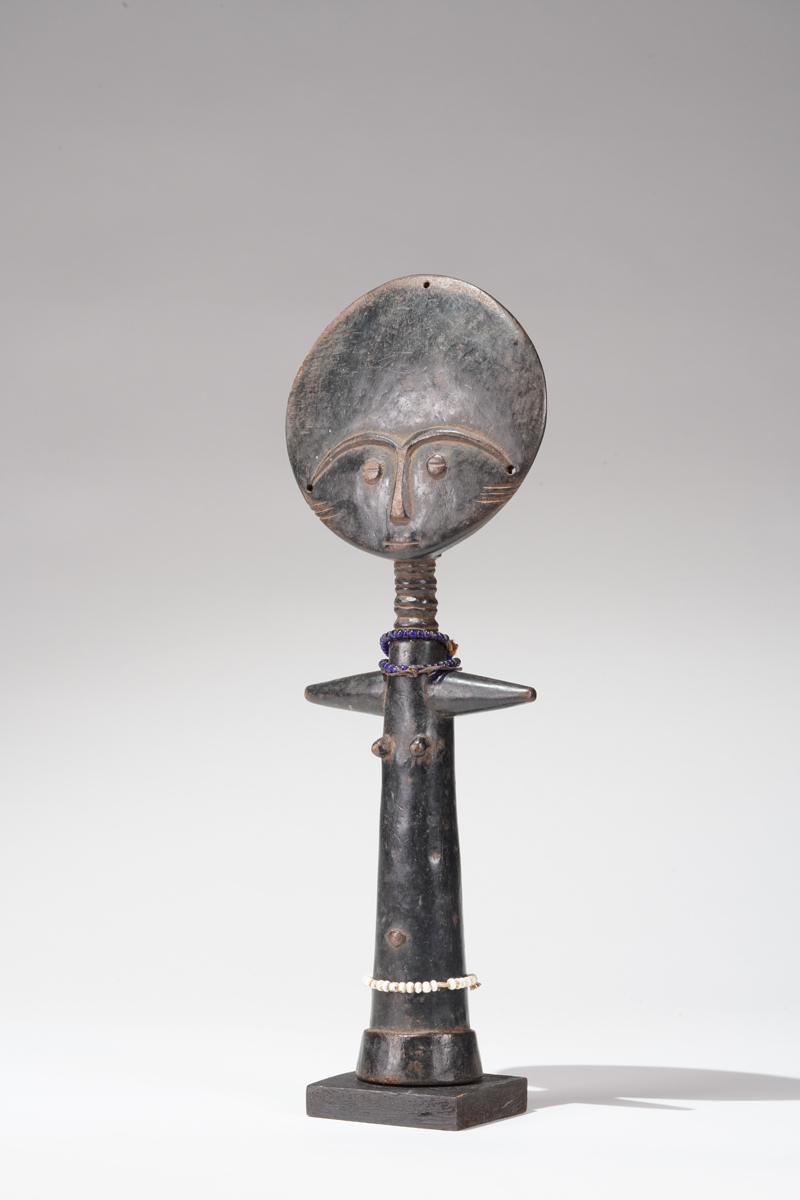 photo: wolfgang-jaenicke.com, for more information, please write us an e-mail with the identification number of the photo identification no. CAB08239.jpg |
 |