 |
 A Moba iron sculpture, Northern Ghana, posted on a stand. The Moba people, residing primarily in the savannah regions of northern Ghana and adjacent areas of Togo and Burkina Faso, have developed a distinctive tradition of iron sculpture that serves both functional and symbolic roles within their communities. These iron objects, which range from utilitarian tools and weapons to sculptural forms, are often imbued with social and spiritual significance beyond their practical uses. Moba iron sculptures are frequently characterized by abstracted and geometric designs, sometimes incorporating figurative elements that reference human or animal forms. The production of iron objects involves sophisticated blacksmithing techniques, a craft traditionally held in high esteem and often surrounded by ritual knowledge. Blacksmiths in Moba society are considered custodians of both technical skill and esoteric wisdom, mediating relationships between the natural and supernatural worlds.¹ The symbolic content of Moba iron sculptures is linked to notions of power, protection, and social order. Some figures or objects serve as amulets or ritual paraphernalia, designed to harness spiritual forces or to embody ancestral authority. The durability and strength of iron itself underscore these themes, reinforcing ideas of resilience and continuity.² While Moba iron sculptures are less widely documented than wooden or ceramic forms from the region, their material presence testifies to a rich artistic and cultural heritage that integrates metallurgical expertise with expressive form and cosmological meaning. Contemporary interest in these objects reflects both ethnographic scholarship and collecting trends, though many remain deeply embedded in local ritual contexts.³
sold Height: 47 cm |
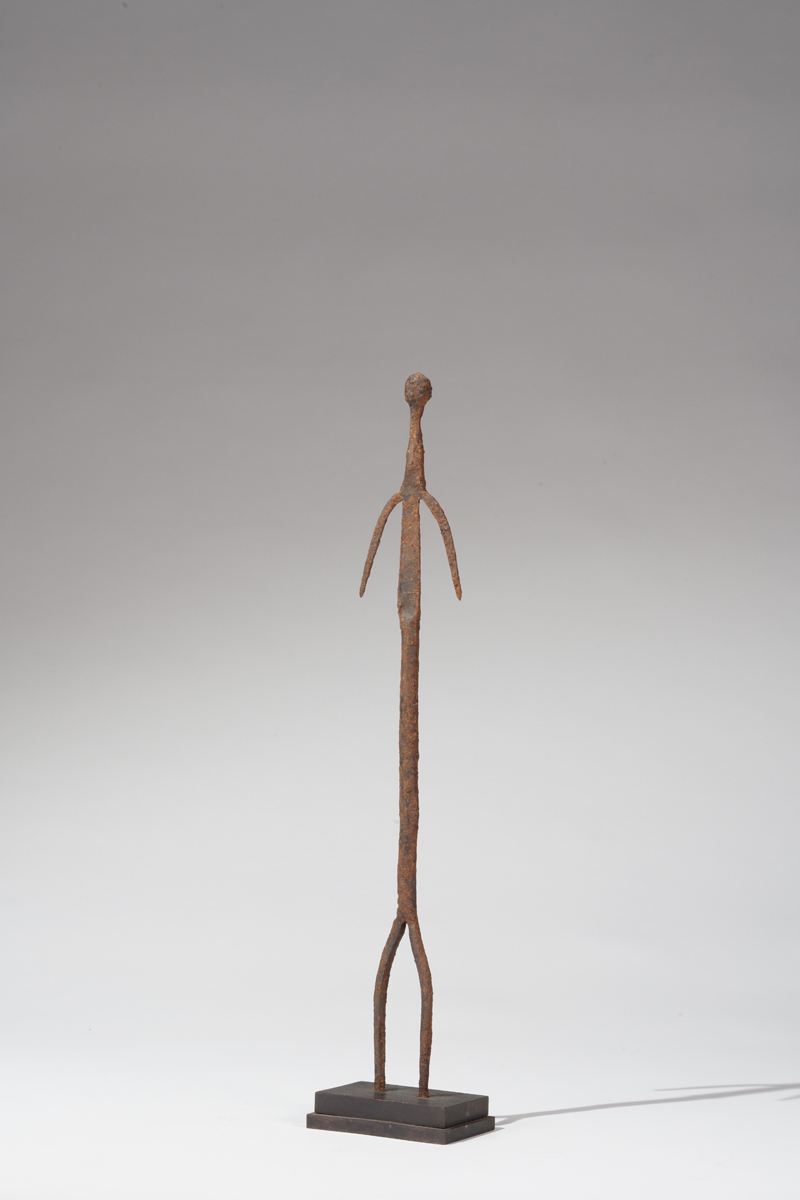 photo: wolfgang-jaenicke.com, for more information, please write us an e-mail with the identification number of the photo identification no. CAB09398.jpg |
 |