 |
 An Akan fertility puppet, Ghana, traces of age and ritual use.. Regional and stylistic variations of the so called akua'ba exist. Among the Fante, for example, the figures tend to be more naturalistic, with greater attention to anatomical detail, such as defined arms and legs, and more realistic facial proportions. Bono figures, in contrast, can present cubistic forms or geometric abstraction. Despite such differences, the ritual and social context remains comparable, rooted in ideas of maternal aspiration, feminine identity, and the ancestral intercession in matters of birth. Over time, akua'mma have transcended their ritual use. They are now often produced as tourist art or collected as emblems of African identity and motherhood. Nevertheless, in certain communities, their ritual and symbolic roles persist. Their continued production and collection reflect the enduring importance of fertility in Akan cosmology and the adaptability of cultural forms to new contexts. Scholars have interpreted akua'ba within a wider discourse on gender, aesthetics, and ritual practice. For example, Herbert M. Cole has emphasized the psychological and social dimensions of the figures, while Suzanne Blier has explored their relation to Akan cosmology and concepts of lineage and spiritual presence. The object’s power lies not only in its material form but also in its role as a medium between the human and spiritual realms. Cole, Herbert M. Mothers and Sons, Fathers and Daughters: The Gender of African Art. UCLA Fowler Museum of Cultural History, 1997. sold Height: 24 cm |
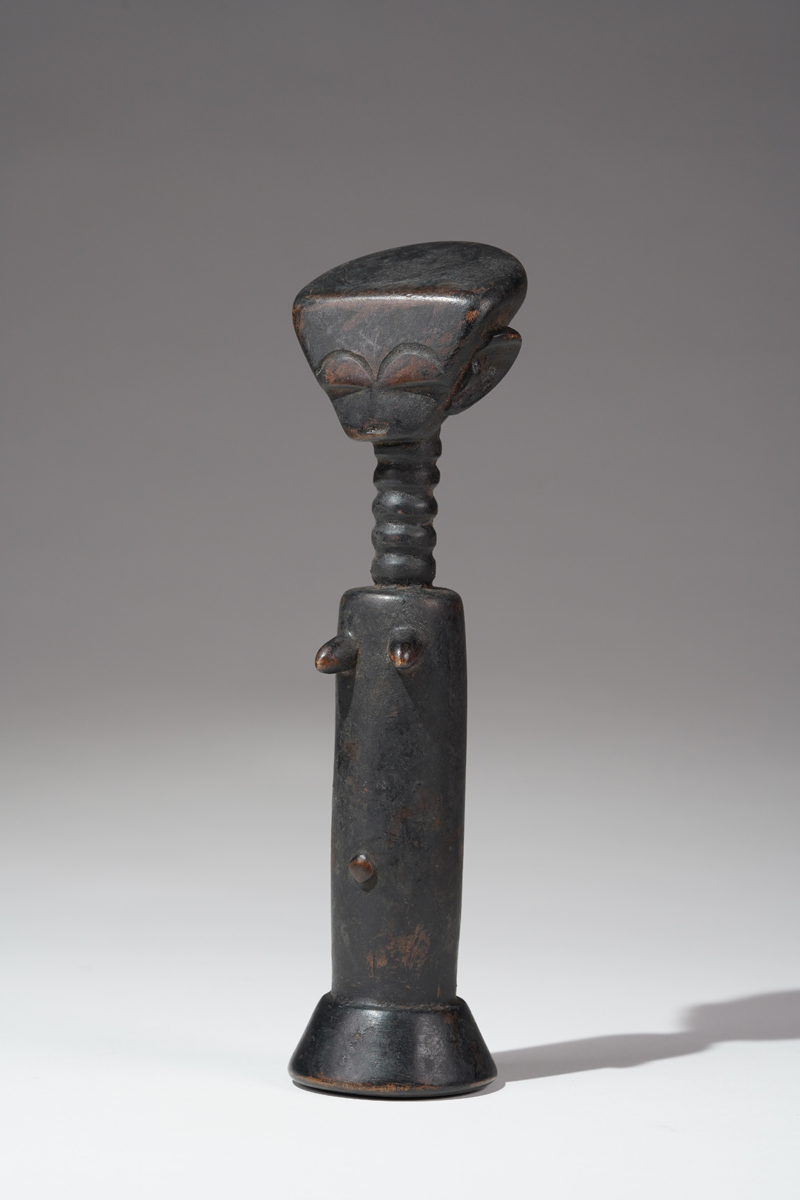 photo: wolfgang-jaenicke.com, for more information, please write us an e-mail with the identification number of the photo identification no. CAB09768.jpg |
 |