 |
 A Moba iron sculpture, Norztheern Ghana, oxidized patina, incl. blackened stand. The iron sculptures of the Moba people of northern Ghana represent a significant tradition within West African metalworking and ritual art. These objects, often abstract and stylized, serve as more than mere decorative items; they embody a complex relationship between material culture, spiritual belief, and social identity. The Moba, whose settlements extend into Togo and Burkina Faso, have maintained an enduring ironworking practice that is deeply embedded in their cultural and cosmological systems. Iron, forged and shaped through the skill of local blacksmiths, carries symbolic weight as a transformative material. The process of smelting and shaping iron parallels notions of creation and power, situating the blacksmith not only as a craftsman but as a mediator between the human and spiritual worlds. Moba iron sculptures frequently take the form of anthropomorphic or zoomorphic figures, rendered in geometric abstraction rather than realistic representation. This stylization is deliberate, aimed at invoking spiritual presence or ancestral potency rather than mere likeness. Such sculptures often function as ritual objects, used in ceremonies to invoke protection, fertility, or communal wellbeing, and occasionally serve as markers of social status or lineage affiliation. The significance of these sculptures extends beyond their physical form; their production and use are intertwined with ritual knowledge and communal values. The ritual context in which these iron works appear reinforces social cohesion and affirms the community’s cosmological worldview. The resilience of the Moba ironworking tradition, despite historical and contemporary challenges, speaks to the continued relevance of these objects within local cultural frameworks. Scholarly interest in Moba iron sculptures has highlighted their importance in understanding the intersection of technology, art, and spirituality in West Africa. While related to broader regional traditions of ironworking found among the Dogon, Yoruba, and Akan peoples, Moba sculptures maintain distinctive formal qualities and localized meanings. Recent ethnographic and art historical studies emphasize the necessity of interpreting these objects within their original cultural context to appreciate fully their multifaceted significance. For a general overview of West African ironworking and its cultural implications, see Schmidt, P. R. "Ironworking and Ritual in West Africa," Journal of African Studies, 2010. On the symbolic role of the blacksmith and the spiritual dimensions of iron in Moba society, consult Meyer, B. "Metals and Meaning: Blacksmiths and Ritual in Northern Ghana," African Arts, 2015. For stylistic analysis and comparisons with neighboring ethnic groups, refer to Vogel, S. "Abstract Forms in West African Iron Sculpture," Museum Anthropology Review, 2018. Ethnographic perspectives on ritual use and social significance of iron sculptures among the Moba are detailed in Koffi, A. "Traditions of Ironwork in Northern Ghana," PhD Dissertation, University of Ghana, 2017. sold Height: 45 cm |
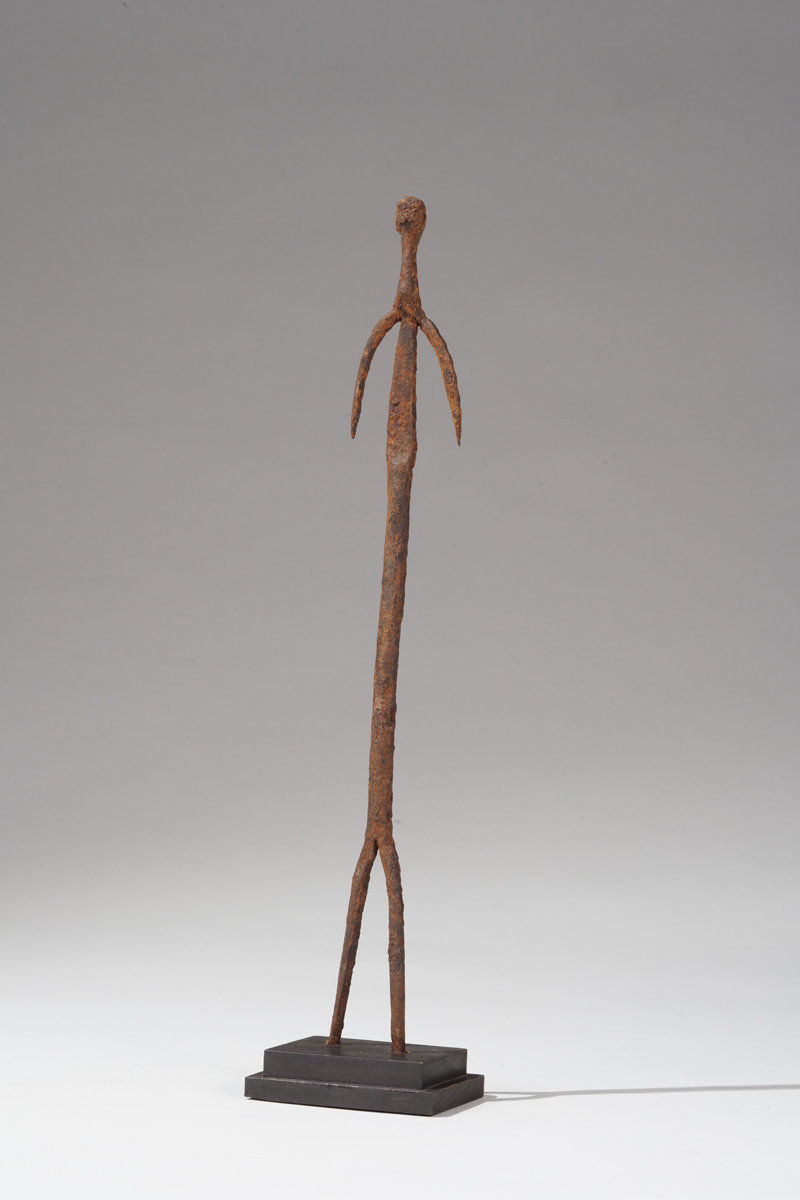 photo: wolfgang-jaenicke.com, for more information, please write us an e-mail with the identification number of the photo identification no. CAB09427.jpg |
 |