 |
 A Gan bronze in shape of a serpent, incl. wooden stand The snake bronzes of the Gan, an ethnic group from southwestern Burkina Faso, are among the most striking examples of ritual metalwork in West Africa. These objects, cast using the lost-wax technique (cire perdue), are fashioned in the form of coiled, stylized snakes and are worn by women around their lower legs during specific ritual performances. Their use is inherently tied to performative contexts, particularly dances that take place during religious ceremonies. In these settings, the bronzes are not merely ornamental but play an active role: the clinking of metal emphasizes the rhythm of the dancers’ movements and contributes to the acoustic structure of the ritual. The symbolic meaning of the snake in West African cosmologies is both layered and profound. Within the Gan spiritual worldview, the snake is associated with fertility, cyclical renewal, and spiritual protection. It is regarded as a liminal being that mediates between the human and non-human realms, particularly between the living and the ancestors or nature spirits. Its ability to shed its skin marks it as a symbol of transformation and regeneration. The women who wear these bronzes are often ritually initiated and fulfill special ceremonial roles—linked to childbirth, healing, and rites of passage—or they embody archetypal figures within the ritual’s dramaturgy. The material aspect of these bronzes is equally significant. Metal casting in the Gan region is not a common craft but is restricted to specialized artisans. Their bronzes stand apart from the predominantly wooden sculptural traditions of neighboring groups such as the Lobi or the Dagara. While wood is often associated with transience and process, bronze—through its sound, weight, and enduring presence—conveys stability, force, and spiritual potency. These are not merely representations but operative agents within a ritual system: they act through presence, sound, and motion in space. In Western collections, Gan snake bronzes often appear as isolated artifacts, removed from the performative and spiritual contexts in which they once operated. Their entry into museums or private collections has generally occurred without documentation of the ceremonies to which they belonged. This displacement inevitably alters their meaning. It is therefore essential to reconstruct their original functions and spheres of significance in order to understand them not only as aesthetically compelling works of art but as active participants in cultural and ritual life. References: sold Height: 20 cm wihtout stand |
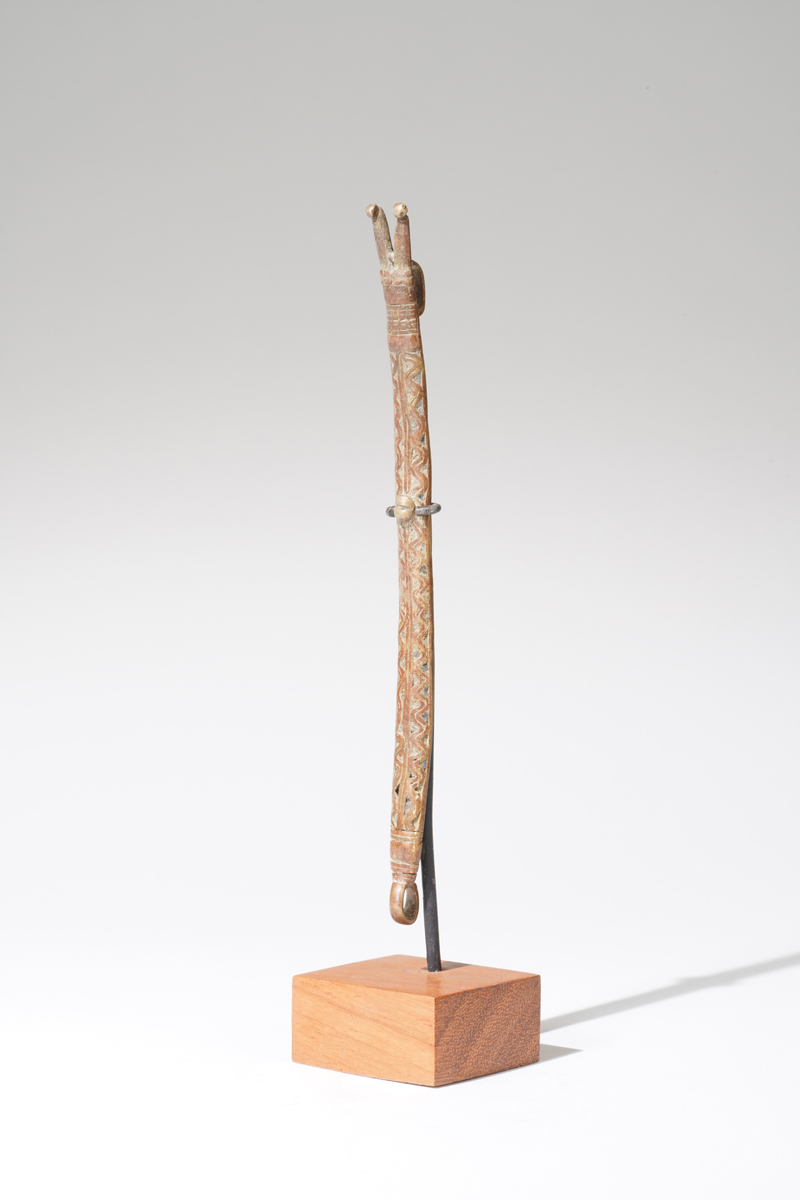 photo: wolfgang-jaenicke.com, for more information, please write us an e-mail with the identification number of the photo identification no. MAZ03188.jpg |
 |