 |
 A Mossi fertility sculpture, called Biga, covered with leather. A Mossi fertility sculpture known as Biga, when covered in leather, indicates an elevated level of ritual specialization within Mossi spiritual practice. While uncovered wooden Biga figures are already central to fertility rites and initiation ceremonies, the addition of a leather covering transforms the object into a more restricted and potent ritual instrument. The leather functions as a protective membrane, preserving the spiritual power believed to reside within the sculpture. It also serves to conceal the figure’s features, emphasizing its status as a vessel for ancestral or spiritual presence rather than a representational form. In many cases, leather-covered Biga figures are associated with private or esoteric rituals and are handled only by initiated women, elder priestesses, or lineage specialists. The covering may also suggest the accumulation of ritual substances—such as libations, oils, or sacrificial matter—over time. These substances are believed to activate and sustain the sculpture’s spiritual charge, and the leather helps to contain this power. The physical act of wrapping the sculpture further aligns it with the idea of gestation and protection, paralleling the maternal function it symbolically supports. Such figures are rarely displayed and are instead kept in shrines or other protected spaces. Their use may extend beyond fertility to encompass healing, initiation, and the invocation of ancestral continuity. As Christopher D. Roy notes, the treatment of ritual objects among the Mossi reflects a consistent concern with the containment and regulation of spiritual energy, with the material transformation of an object indicating its changing ritual status (Roy 1987). Leather-covered Biga figures thus represent a convergence of material, symbolic, and ritual functions, embodying both personal and communal hopes for continuity, protection, and renewal. A Mossi fertility sculpture known as Biga occupies a significant role within the ritual and social practices of the Mossi people of Burkina Faso. Carved in wood and typically depicting a seated or kneeling female figure, often with pronounced breasts and hips, such sculptures serve as idealized representations of motherhood and fertility. The name Biga, meaning "child" in Mooré, points directly to the sculpture's primary function: to invoke and safeguard fertility, to ensure the continuity of lineage, and to support women during periods of transition such as marriage, childbirth, or initiation. The aesthetic of the Biga figure is highly stylized rather than naturalistic, adhering to cultural codes that emphasize symbolic expression over anatomical accuracy. Scarification patterns, elongated proportions, and compositional symmetry are common, reflecting not only local standards of beauty but also metaphysical attributes associated with womanhood and maternal capacity. These visual choices underline the sculpture’s role not as a portrait of a specific individual, but as a conduit for spiritual and ancestral presence. Within the ritual context, Biga sculptures are often kept in domestic or lineage shrines and are activated through offerings, libations, and prayer. They may be consulted by women seeking to conceive or carried in ceremonies that mark a woman’s entry into adulthood. In some cases, they are used posthumously, serving as markers of a woman's reproductive legacy and symbolic rebirth. Their use is generally restricted to initiated women or female elders, underlining their role within the gendered division of spiritual responsibilities in Mossi society. The Biga also operates within a broader cosmological system in which ancestors, fertility, and agricultural abundance are deeply interconnected. As such, these sculptures do not merely reflect individual desires for offspring but also express collective concerns about the continuity and well-being of the community as a whole. In this way, the Biga serves as both a personal talisman and a communal emblem of life, renewal, and spiritual interdependence. Christopher D. Roy has noted the importance of such figures in the ritual life of the Mossi, emphasizing their integration into a larger system of spiritual exchange and social structure (Roy 1987). Similarly, Hans Himmelheber draws attention to the symbolic economy of form in Mossi sculpture, in which stylistic abstraction communicates spiritual potency rather than physical verisimilitude (Himmelheber 1960). References sold Height: 26 cm |
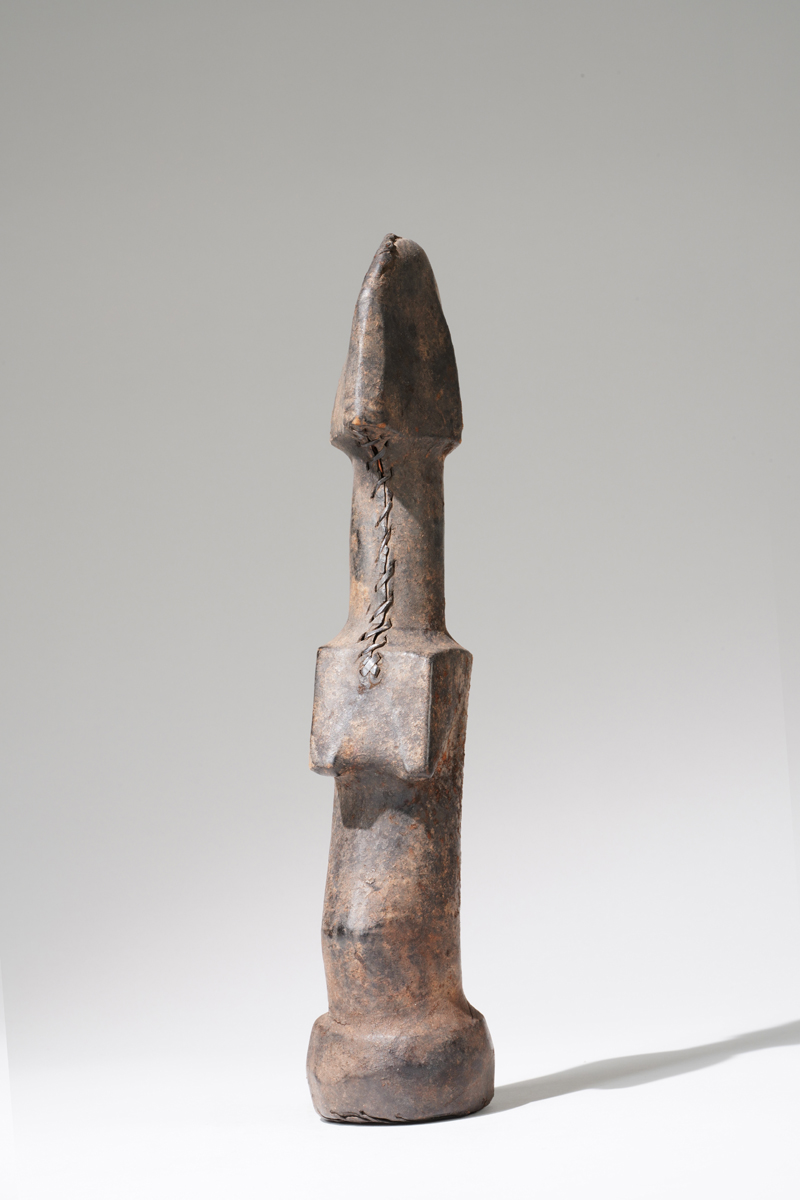 photo: wolfgang-jaenicke.com, for more information, please write us an e-mail with the identification number of the photo identification no. MAZ03315.jpg |
 |