|
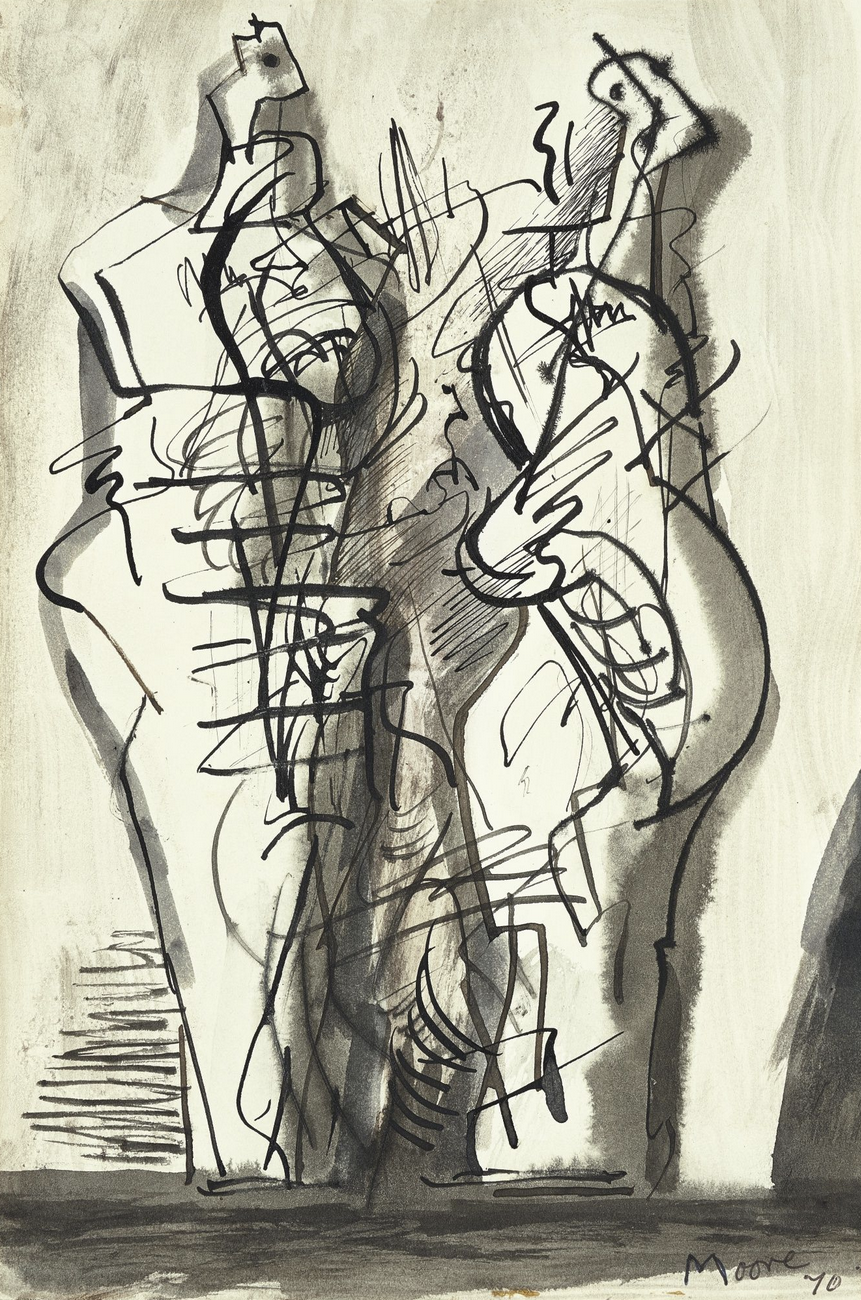
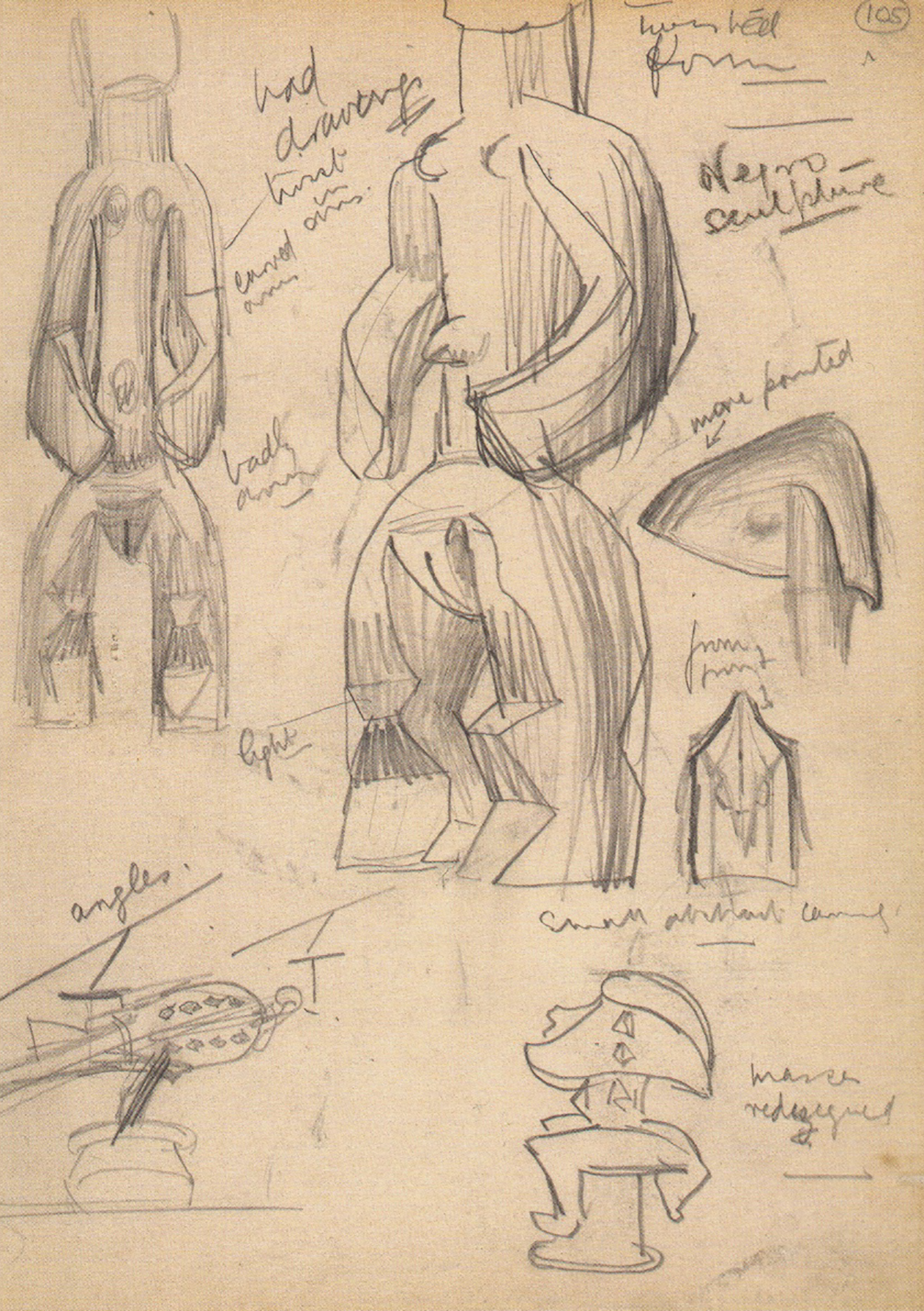
 A Mumuye sculpture, Nigeria, Taraba region. Certificate of origin and provenance. „Mumye is a collective term used to denote different sedentary farmer groups occupying the rocky hills south of the Benue River, between the towns of Jalingo in the Taraba State and Jeleng in the Adamawa State, in northeastern Nigeria. […] It is generally accepted, however, that the earliest figures to arrive in the West are two figures now housed at the British Museum, London, one memorialised by Henry Moore in his sketchbook.“ p.9 „Mumuye figures do, however, show similarity in style with those attributed to the Jukun […] which suggests cultural and religious affinities between them“ p.9. It is in the 1970’s that Mumuye sculptures caught the attention of established museums in the West, following extensive scholarly research and publications around them in the 1960’s. Many exhibitions sprung from this keen interest in these figures, ranging from the Museum of Primitive Art, New York 1961, Die Kunst von Schwartz Afrika, Kunsthaus Zurich 1970’s, African Sculpture: The invention of the Figure, The Hague 1990’s, Visual Encounters: Afric, Oceania and Modern Art, Foundation Beyeler, Switzerland 2009, Central Nigeria Unmasked: Arts of the Venue River Valley at the Fowler Museum, UCAL 2011, to name but a few. sold Height: 110 cm |
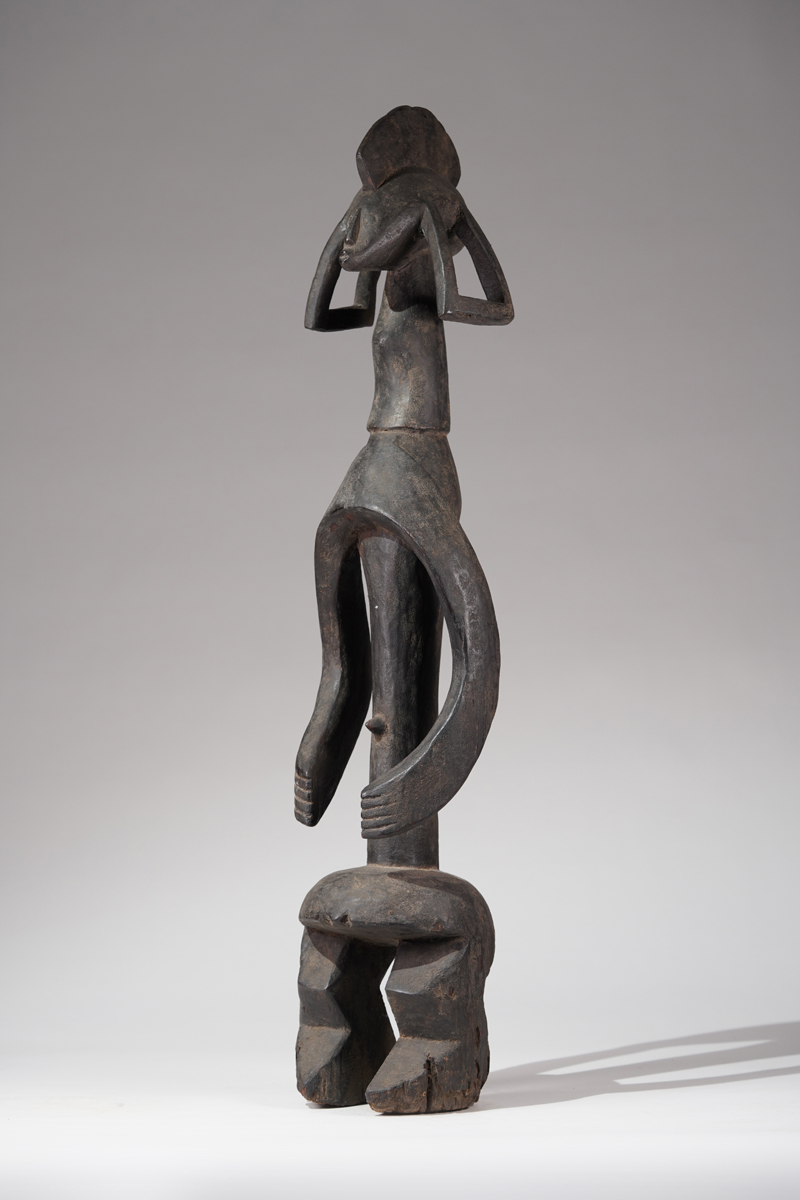 photo: wolfgang-jaenicke.com, for more information, please write us an e-mail with the identification number of the photo identification no. CAB10749.jpg |
 The sculptural traditions of the Mumuye people of northeastern Nigeria present a striking formal language that finds resonance with key developments in European modernist sculpture, particularly in the work of Jean Arp and Constantin Brâncuși. Though there is no historical evidence of direct influence between these traditions, the convergence in form, structure, and conceptual intent invites a deeper comparative consideration. Such an approach not only reveals the affinities between these visual cultures but also unsettles the often one-sided narrative of African art as a passive source for Western modernism. Mumuye figures are notable for their highly abstracted human forms: elongated bodies, segmented limbs, and a complex interplay between solid and void. These works achieve a dynamic balance between asymmetry and verticality, creating a tension between stasis and movement that appears remarkably contemporary. The manipulation of space—particularly the incorporation of negative space as an active sculptural element—echoes strategies that Jean Arp developed within the context of Dada and Surrealism. Arp’s biomorphic forms, with their smooth surfaces and organic silhouettes, similarly reject mimetic representation in favor of an intuitive and poetic reduction of form. Like the Mumuye carvers, Arp explores the body not as anatomy but as a site of rhythm, flow, and symbolic compression. In contrast, Brâncuși's sculptural vocabulary draws from a different lineage, but arrives at equally convergent ends. His vertical compositions—most notably Endless Column—articulate a modular repetition of simple, abstract units that evoke both the infinite and the sacred. Mumuye figures, often carved from a single piece of wood, rely on a comparable elongation of the human form, rendering the figure as an upright presence that transcends individuality. While Brâncuși’s work is deeply informed by Romanian folk traditions and a modernist ideal of essentialism, the Mumuye sculpture shares this concern for the archetypal. Both achieve an abstraction not through the denial of the human, but through its distillation into a purified, symbolic gesture. What unites these practices is not a shared origin, but a shared approach to form as a means of philosophical inquiry. In both Mumuye sculpture and the works of Arp and Brâncuși, the figure is stripped of narrative and specificity, emerging instead as an emblem of presence, ritual, and interiority. The vertical axis becomes not merely a compositional tool, but a metaphysical one—a gesture toward continuity, transcendence, and the unseen forces that shape human experience. To consider these works together is not to collapse their cultural specificities, but to recognize the possibility of parallel modernities—distinct yet connected explorations of form, space, and meaning. The Mumuye figure does not serve as a precursor or primitive model for European sculpture; it stands alongside it, fully autonomous and equally modern. By placing these sculptural traditions in dialogue, we begin to see how abstraction, often claimed as the domain of the Western avant-garde, in fact emerges across cultures as a vital strategy for negotiating the visible and the invisible, the material and the immaterial.
|