 |
 A small male Dogon bronze figure, Mali. incl. stand. Small Dogon bronze figures, typically ranging in height from a few centimeters to around twenty centimeters, are distinctive ritual and commemorative objects produced by the Dogon people of Mali, primarily between the 15th and 20th centuries. These cast-metal figures are usually created using the lost-wax method, a technique known across West Africa and particularly associated with prestige and ritual arts. The small scale of these figures does not diminish their cultural significance; on the contrary, their diminutive size is often a result of their function as portable or personal ritual items, commonly used in household shrines or buried with the dead. The iconography of these bronze figures varies widely, though recurring themes include depictions of equestrian figures, ancestral representations, paired male and female figures, and mythologically significant beings. The figures are frequently elongated, abstracted, and highly stylized, often featuring exaggerated limbs and schematic facial forms. These stylistic choices, though aesthetically striking, are not purely decorative—they reflect longstanding Dogon artistic conventions that emphasize symbolic rather than naturalistic representation. Such symbolism aligns with Dogon cosmology, where proportion and abstraction often carry metaphysical meanings. Many of the bronze figures are thought to represent binu spirits or deified ancestors, acting as intermediaries between the living and the spiritual realm. Others are linked to specific myths, such as the primordial twins or Nommo beings, which feature prominently in Dogon religious narratives. According to the ethnographic work of Marcel Griaule and later Germaine Dieterlen, Dogon bronzes can be read within a wider system of signs and symbols, although subsequent scholars have critiqued the over-structuralist tendencies of their interpretations. Stylistically, Dogon bronzes share affinities with the metallurgical traditions of the neighboring Bamana and Senufo peoples, yet they are distinguishable by their more angular forms and the emphasis on frontal symmetry. In some cases, the figures exhibit traits suggesting cultural syncretism or artistic exchange, particularly in areas where Dogon communities bordered those of other Mande-speaking groups. Despite their widespread appeal among collectors and their regular appearance in ethnographic collections since the early 20th century, Dogon bronze figures remain poorly contextualized due to the difficulty in securely dating them and the limited documentation of their use in situ. Many examples entered Western collections during the colonial period with minimal provenance. However, their consistent formal qualities and association with funerary and divinatory contexts suggest a continuity of usage rooted in localized ritual practices. In catalogue literature, these figures are typically classified by subject (e.g., equestrian, standing male, seated pair), material (bronze or brass alloy), and estimated period, with stylistic comparison often playing a key role in tentative dating. Though some have argued for an earlier origin dating back to pre-Dogon Tellem occupation of the Bandiagara escarpment, the majority of extant pieces are now thought to date from the 18th to 20th centuries. sold Height: 6 cm |
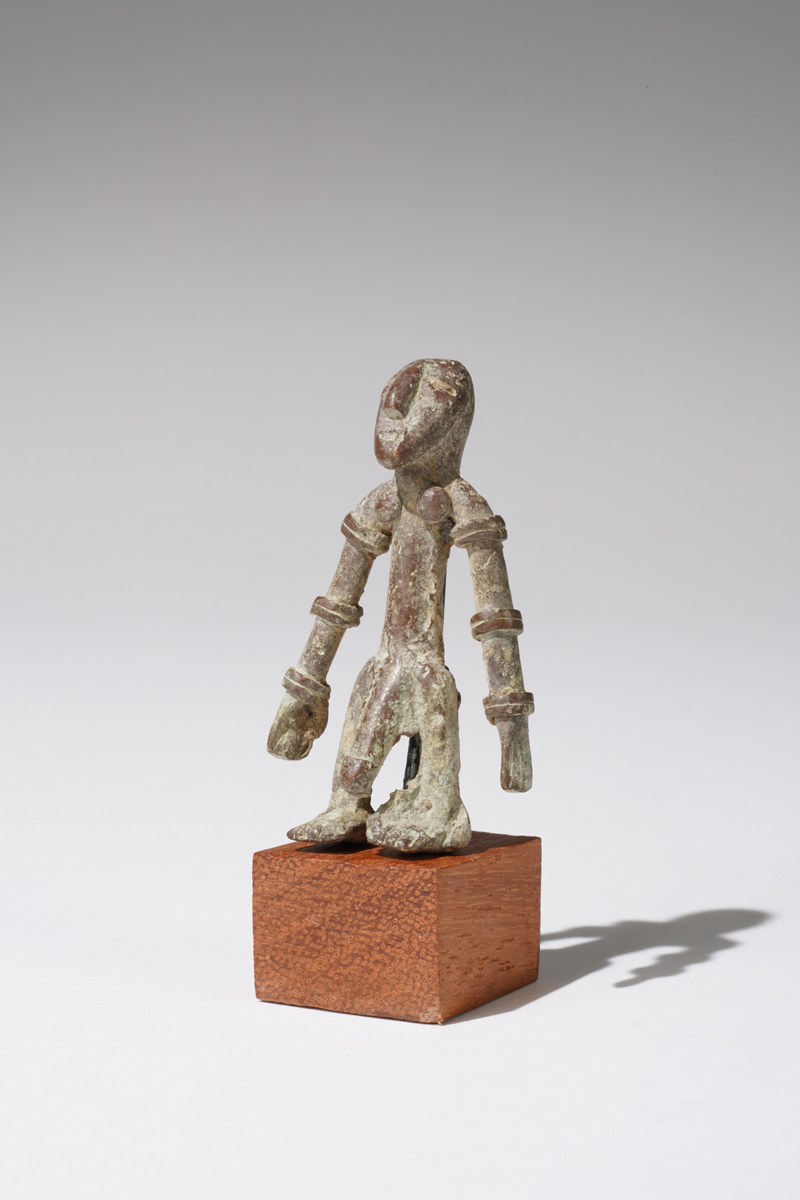 photo: wolfgang-jaenicke.com, for more information, please write us an e-mail with the identification number of the photo identification no. MAZ03446.jpg |
 |