 |
 The mask described here, from the Kabakouma region in the western highlands of Ivory Coast, belongs to the cultural milieu of the Kroumein and Krou groups, with stylistic parallels particularly evident in the mask traditions of the Wè (Guéré) and Dan. This border region between Liberia and Côte d’Ivoire is characterized by a pronounced diversity of mask forms used in initiatory, legal, and performative contexts. The mask shows signs of age and ritual use. Characteristic of this particular object is the dense covering of its surface with numerous small horns, which seem to overgrow the face and suggest a heightened, almost aggressive vitality. Two larger horns, curved towards the nose, structure the face axially and draw the eye to the central, highly reduced features: The slit-like eyes appear depersonalized, while the flat, triangular nose and the slightly open mouth with its full lips create a tension between abstraction and physicality. The distinctive hairline, formed by a braided band adorned with applied shells, suggests prestige and possibly transregional trade networks in which cowrie shells served as symbols of value and status. The perforated border with remnants of a fastening cord indicates performative use, where the mask was firmly fixed to the wearer's head. Literature (selection) CAB45739 sold Height: 27 cm |
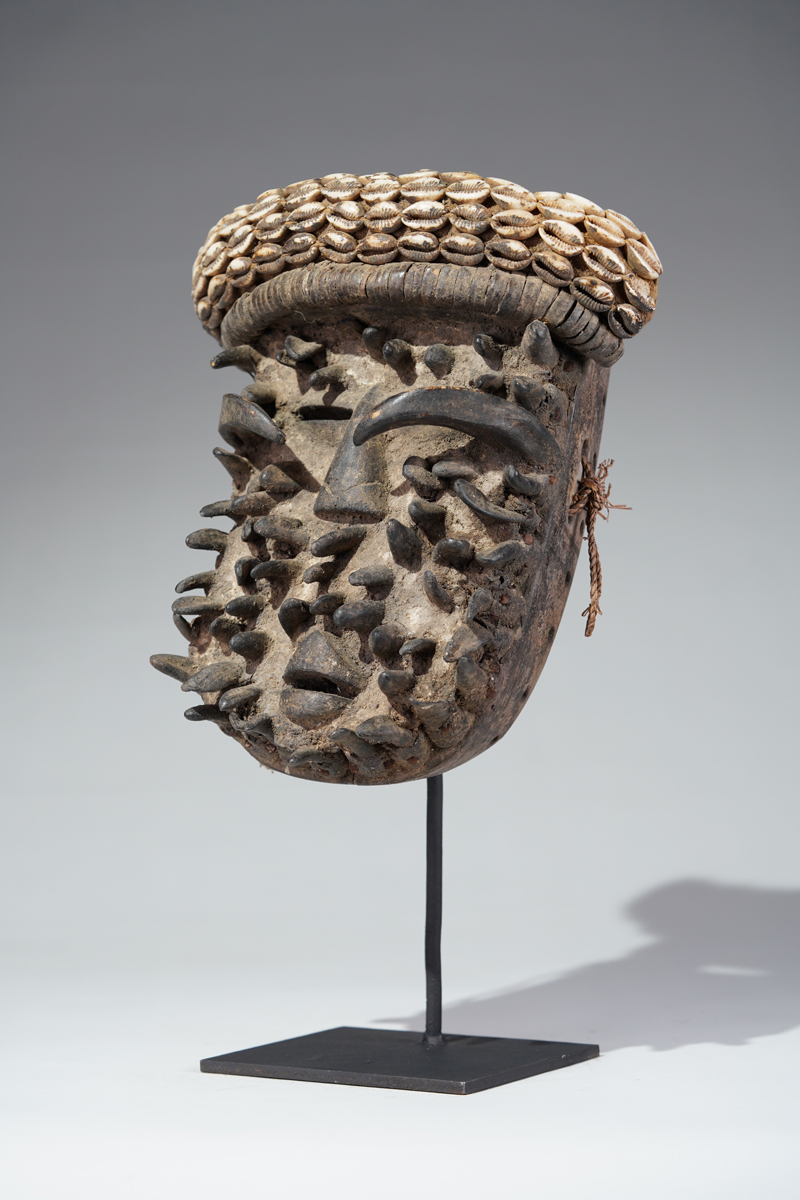 photo: wolfgang-jaenicke.com, for more information, please write us an e-mail with the identification number of the photo identification no. CAB45739.jpg |
 |