 |
 This female figure from the Ijebu region of southwestern Nigeria is rooted in the Yoruba cultural context and belongs to the Ibeji figurine tradition. These sculptures are closely linked to the twin cult, which holds paramount importance within Yoruba society. Ibeji figurines serve as material representatives of deceased twins and are ritually cared for, tended, and integrated into social life. The figure is upright and frontally oriented, characterized by a balanced combination of stylization and meticulous detail. The elaborately crafted hairstyle alludes to social identity and aesthetic ideals, while the striking facial features with a closed mouth convey a controlled, dignified presence. Indentations on the cheeks and ears can be interpreted as scarification patterns, marking affiliation and status. The arms are held close to the body, with a colorful beaded necklace on the wrist representing an important element of ritual care. The prominent, forward-facing breasts and the emphasized navel allude to concepts of vitality and physical integrity. The proportionally elongated torso and the slightly bent knees create a subtle dynamism, which is stabilized by the flat stance on a pedestal. The glossy patina and minor signs of wear attest to continuous ritual handling. In its formal clarity and material presence, the figure embodies the enduring bond between the living and the dead. Literature (selection) CAB 47014 sold Height: 26 cm |
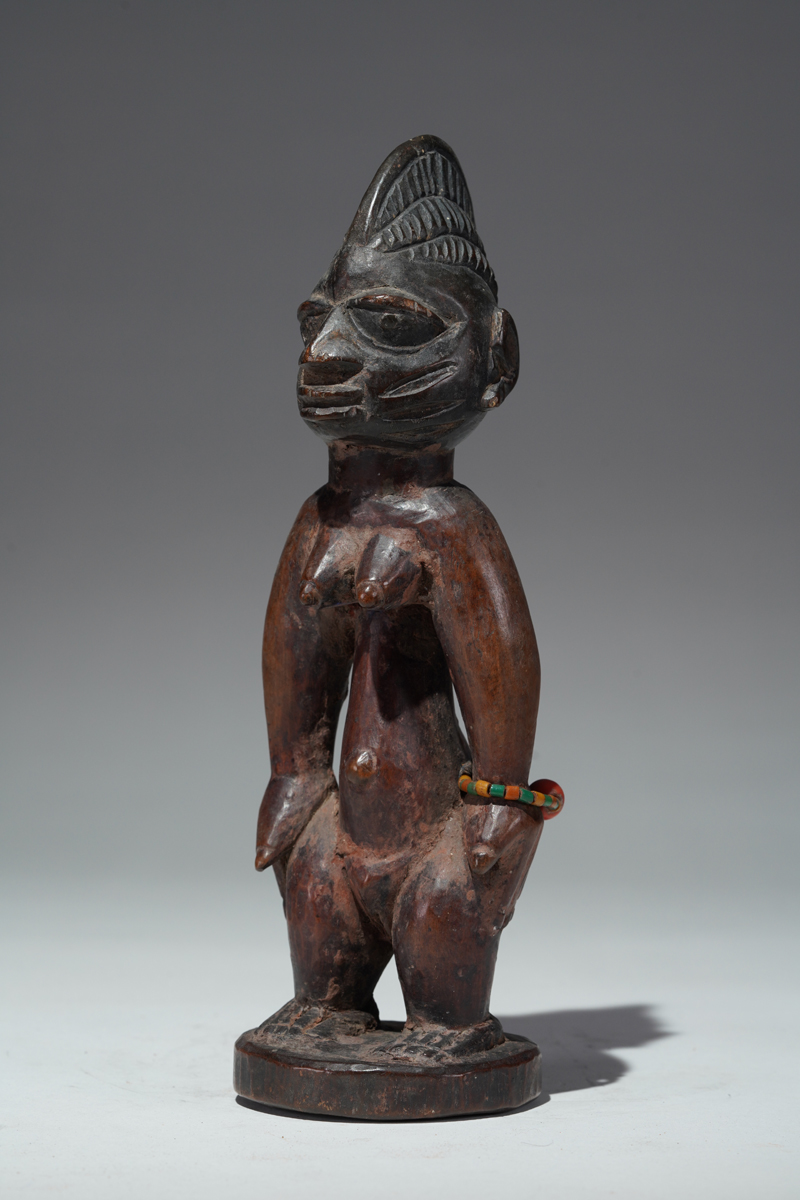 photo: wolfgang-jaenicke.com, for more information, please write us an e-mail with the identification number of the photo identification no. CAB47014.jpg |
 |