 |
 This Aesir sculpture from the Cotonou region of southern Benin is situated within the cultural context of the Fon people and their associated Vodun traditions. Aesir objects function as portable altars and repositories of memory, serving as tools for communicating with ancestors and spiritual entities. Within the Vodun practices of Benin's coastal regions, they represent central ritual instruments where social memory, religious veneration, and political representation intertwine. The sculpture is a complex metal construction, its upper surface forming an umbrella-like platform. A small seated figure is positioned on this platform in a reclining seat. Its finely crafted face, slightly tilted head, and intricately detailed limbs lend it a contemplative, almost retrospective presence. Palm fronds flank the figure, while a stylized tree in front completes the iconographic scene and alludes to cosmological concepts of growth, continuity, and genealogical connection. The sculpture is a complex metal construction, its upper surface adorned with an umbrella-like platform. The platform is framed by diamond-shaped, ornamented metal plates that create a clear rhythmic structure. Below, several metal struts converge into a central shaft, which terminates in a large, spherical metal unit that stabilizes the vertical axis. The entire structure is mounted on a base and shows clear signs of wear and abrasion, indicating long ritual use. In its formal complexity and narrative density, the Aesir sculpture embodies a medium of remembrance in which ancestral presence, social order, and ritual action intertwine. Literature (selection) Blier, Suzanne Preston: African Vodun: Art, Psychology, and Power. Chicago, 1995. CAB 47224 sold Height: 51 cm |
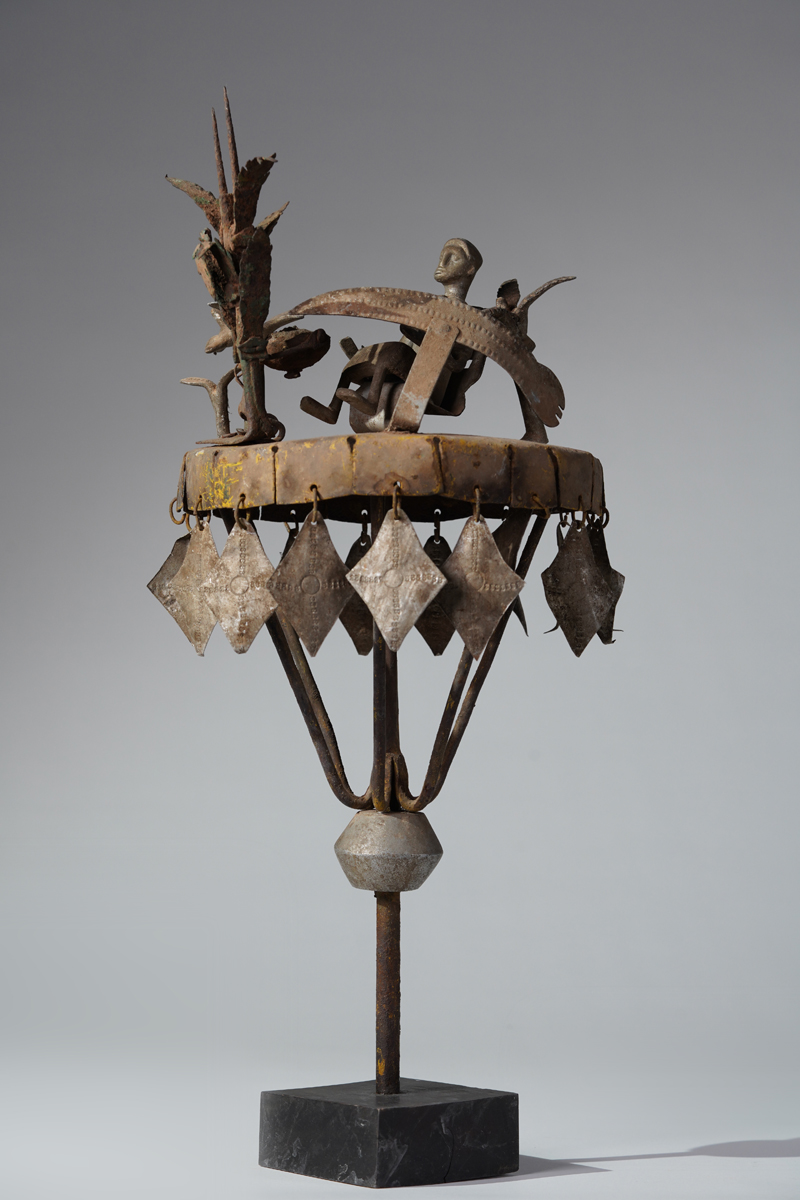 photo: wolfgang-jaenicke.com, for more information, please write us an e-mail with the identification number of the photo identification no. CAB47224.jpg |
 |