|
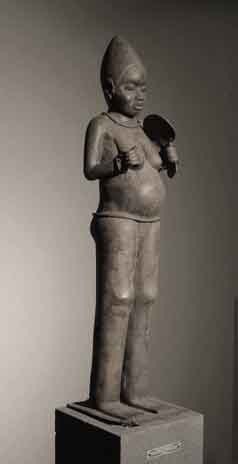
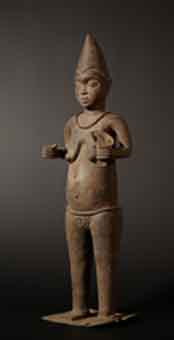
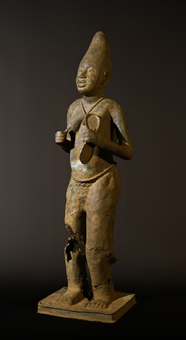
 A fragmentary, female Ife/ Tada bronze. Female, naked figure, dressed only with a Loin leaf on a kind of hip band, arms bent in front of the small, almost childlike breasts, plaited collar. The wavy hair formed into a cone. Low forehead, eyes with heavy lids, the nose small in relation to the full lips, relatively large ears. The narative is connected with the foundation of the Nupe based on the Tsoede Kingdom. in the Nupe villages of Tada and Jebba—one of them apparently an Ife work and another in a more recent Yoruba style. Others of this group, which include the largest castings ever made in sub-Saharan Africa, share features with Benin sculpture and have other elements that are widely distributed in on both sides of the Niger, but mainly to the east, live the Igbo. Traditionally they have lived in small and often isolated settlements scattered through the forest. Only on the northern and western edges of the area, under influence from Igala and Benin, are hereditary rulers found. The naturalistic proportions of head and body and lifelike limbs, arms, and torso are some of the distinctive features of this style. Also characteristic of Ife culture, the figure wears a wrapper with a sash tied on the left hip. source Alice Apley. According to the UNESCO Convention of 1970, a claim for repatriation expires one year after the authorities of a country of origin have learned where and with whom a cultural object is located. Wolfgang Jaenicke Gallery therefore always informs about every newly imported object. Especially about the bronzes from Nigeria shown on this page, which are published in the internet and are accessible to everyone. Organizations dealing with restitution issues, but also freelance art historians employed by the state, such as restitution experts like Benedicte Savoy, are regularly informed about objects in the Galerie Wolfgang Jaenicke. Every buyer of an art object, regardless whether it is made of wood, terra-cotta or bronze, must be aware that from a European legal perspective, traditional African art usually came from the respective African country of origin with insufficient export documents. Galerie Wolfgang Jaenicke, Berlin, tries to do justice to this dilemma by acting with the greatest possible transparency. The export policy of African states is problematic for art historical research, since African and European dealers usually work covertly due to diffuse legal situations and important information that was passed on from trade to science before 1970 tends to be lost. In case of uncertainties, please contact the managing director of Jaenicke-Njoya GmbH, Wolfgang Jaenicke. It is in the interest of the gallery to clarify any questionable situation with all available means. Height: 73 cm |
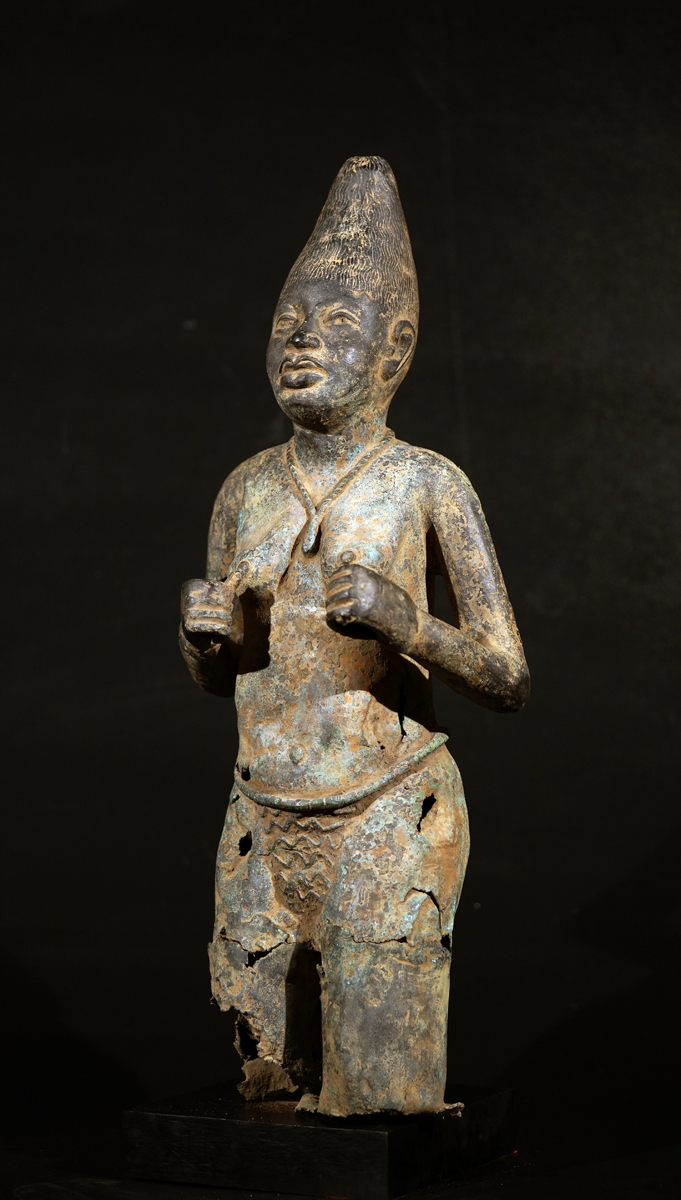 photo: wolfgang-jaenicke.com, for more information, please write us an e-mail with the identification number of the photo identification no. CSC06675.jpg |

A fragmentary female Tada bronze Gallery Wolfgang Jaenicke
|